
Southern
Alleghenies Planning & Development Commission
Executive Summary of the Final Plan
Greenways
are linear, natural corridors
within which historical, recreational and natural resources are conserved and
may be utilized by the public.
Greenways may include land or river
trails for recreational use and for educational interpretation of resources.
Conservation
greenways conserve natural resources such as:
Unique habitats
Wetlands
Migration routes for wildlife
Riparian forest buffers — areas of stream bank vegetation
that shield rivers from soil erosion and sedimentation that originates from
agriculture or industry
View sheds — large, easily visible areas of significant
scenic and aesthetic value
Recreation
greenways conserve recreational resources such as:
·
River trails — sections of river that have public access
points and can be used for fishing, canoeing, boating, rafting and kayaking
·
Land trails — can be used for hiking, biking, horseback
riding, cross-country skiing, and motorized vehicle transportation
Heritage greenways conserve historical resources such as:
·
Remnants of old transportation features, abandoned
railroads, bridges, tunnels, and canals
· Significant historical
buildings
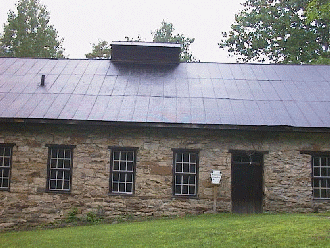
Keystone Foundry Museum
Recently,
a number of positive changes have been occurring along the Raystown Branch.
Historical buildings are being preserved and water quality enhancements
are being made. The Raystown
Branch Juniata River Water Trail has been developed and promoted.
In addition to these many projects, the Juniata Clean Water Partnership
(JCWP) conducted a PA Department of Conservation and Natural Resources
Greenway Plan for the Raystown Branch which has been completed in December,
2001. Greenways
are “linear, natural corridors within which natural, historical, and
recreational resources are conserved and often utilized by the public”.
Therefore, this plan outlines existing resources, as well as
specific projects that could enhance these resources within Raystown Branch
communities.
Some of the examples of greenway-related resources include: locally or regionally
significant historical buildings or landmarks; biologically important areas;
nature or rail-trails; and municipal or community parks.
Some specific examples of greenway-related projects are: stream bank
conservation; sound land use; water quality improvements; historical building
preservation; land or water trail development; and recreational park
development.
Please join in and get involved in all of the positive changes occurring along this significant corridor of land and water. To do so, contact the JCWP at (814) 506-1190 or at [email protected] or attend one of the Raystown/Huntingdon & Broad Top Greenway Partnership meetings listed on our Calendar of Events page.
Following is a list of components that will be included within the plan.
Juniata Woolen Mill
Greenway Feasibility Study/Plan Components
Natural
Resources Inventory
Ø
Natural
Areas (such as state parks and game lands)
Ø
Topography
Ø
Geology
Ø
Soils
Ø
Land
Use
Ø
Environmentally
Impacted Streams and Land
Historical
Resources Inventory
Ø
State
Heritage Parks
Ø
Historic
Sites and Districts
Ø
Historic
Engineering and Industrial Sites
Ø
Other
Locally Significant Resources
Recreational
Resources Inventory
Ø
All
Publicly Accessible Lands (federal, state, or local)
Ø
Land
Trails and Trailheads
Ø
River
Trails and Points of River Access
Guide
to Land Management Practices
Ø
Researching
Land Ownership
Ø
Ethical
Land Management Partnerships
Ø
Conservation
Easements
Overall
Value Determination of Greenway
Ø
Ecological
Impacts
Ø
Social
Impacts
Ø
Economic
Impacts
Ø
Demand
and Use
Ø
Costs
Ø
Benefit
vs. Cost Analysis
General
Recommendations (potential
examples)
Ø
Land
Conservation
Ø
Riparian
Forest Buffer Establishment
Ø
Development
of River Trails and Points of Access
Ø
Completion
of County Natural Heritage Inventories
Ø
Formation/Further
Development of Corridor’s Greenway Alliance
Specific
Greenway and Trail Options
Ø
Options
Ø
Measures
and Approaches
Ø
Potential
Partners
Ø
Funding
Options
Ø
Timetables
Guide
to Establishing Riparian Forest Buffers
Comprehensive Listing of Potential Funding Sources
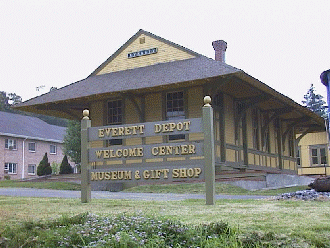
Everett Welcome Center